Question 7:
Diagram 7 shows the respiratory structures of a frog.
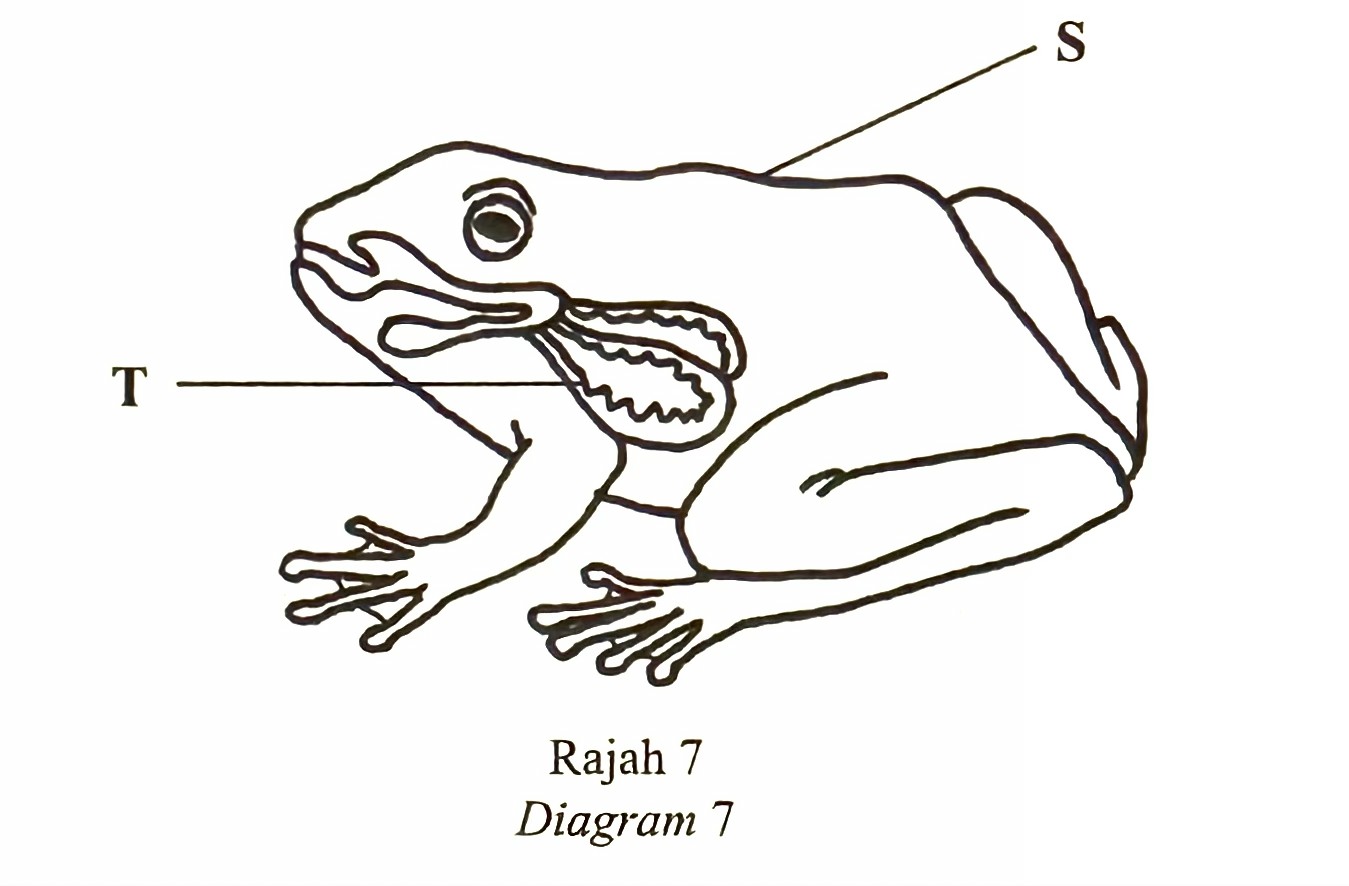 (a) State the name of
S : ……………………….
T : ……………………………
[2 marks]
(b) Give one adaptation of respiratory structure S. [1 mark]
(c) People who have thalassemia have smaller size of red blood cells. The following are the symptoms of thalassemia.
Based on your knowledge on the transport of respiratory gases, explain why the symptoms occur.
[3 marks]
(d) During haze, students with asthma are advised not to carry out co-curricular activities outside the classroom so that they will not experience shortness of breath.
Explain the benefits of the advice. [3 marks]
Answer:
(a) S: Skin
T: Lungs
(b) Thin // Highly permeable to respiratory gases // Moist // Many blood capillary networks // Large surface area
Any one answers
(c)
P1: Less oxygen is transported to body tissues
P2: Low hemoglobin count // abnormal
P3: Lack of oxyhemoglobin formation
P4: Cellular respiration rate decreases // Less energy is produced
Any three answers
(d)
P1: Less exposure to dust/dust/smoke
P2: Bronchiole walls are not swollen/thickened // Less mucus is secreted
P3: The opening of the bronchiole tubes / airways becomes normal / does not narrow
P4: Normal airflow
Any three answers
Diagram 7 shows the respiratory structures of a frog.
(a) State the name ofS : ……………………….
T : ……………………………
[2 marks]
(b) Give one adaptation of respiratory structure S. [1 mark]
(c) People who have thalassemia have smaller size of red blood cells. The following are the symptoms of thalassemia.
| – Tires easily – Pale face – Fatigue |
[3 marks]
(d) During haze, students with asthma are advised not to carry out co-curricular activities outside the classroom so that they will not experience shortness of breath.
Explain the benefits of the advice. [3 marks]
Answer:
(a) S: Skin
T: Lungs
(b) Thin // Highly permeable to respiratory gases // Moist // Many blood capillary networks // Large surface area
Any one answers
(c)
P1: Less oxygen is transported to body tissues
P2: Low hemoglobin count // abnormal
P3: Lack of oxyhemoglobin formation
P4: Cellular respiration rate decreases // Less energy is produced
Any three answers
(d)
P1: Less exposure to dust/dust/smoke
P2: Bronchiole walls are not swollen/thickened // Less mucus is secreted
P3: The opening of the bronchiole tubes / airways becomes normal / does not narrow
P4: Normal airflow
Any three answers