Question 5:
Diagram 5.1 shows a cross-section of a leaf lamina.
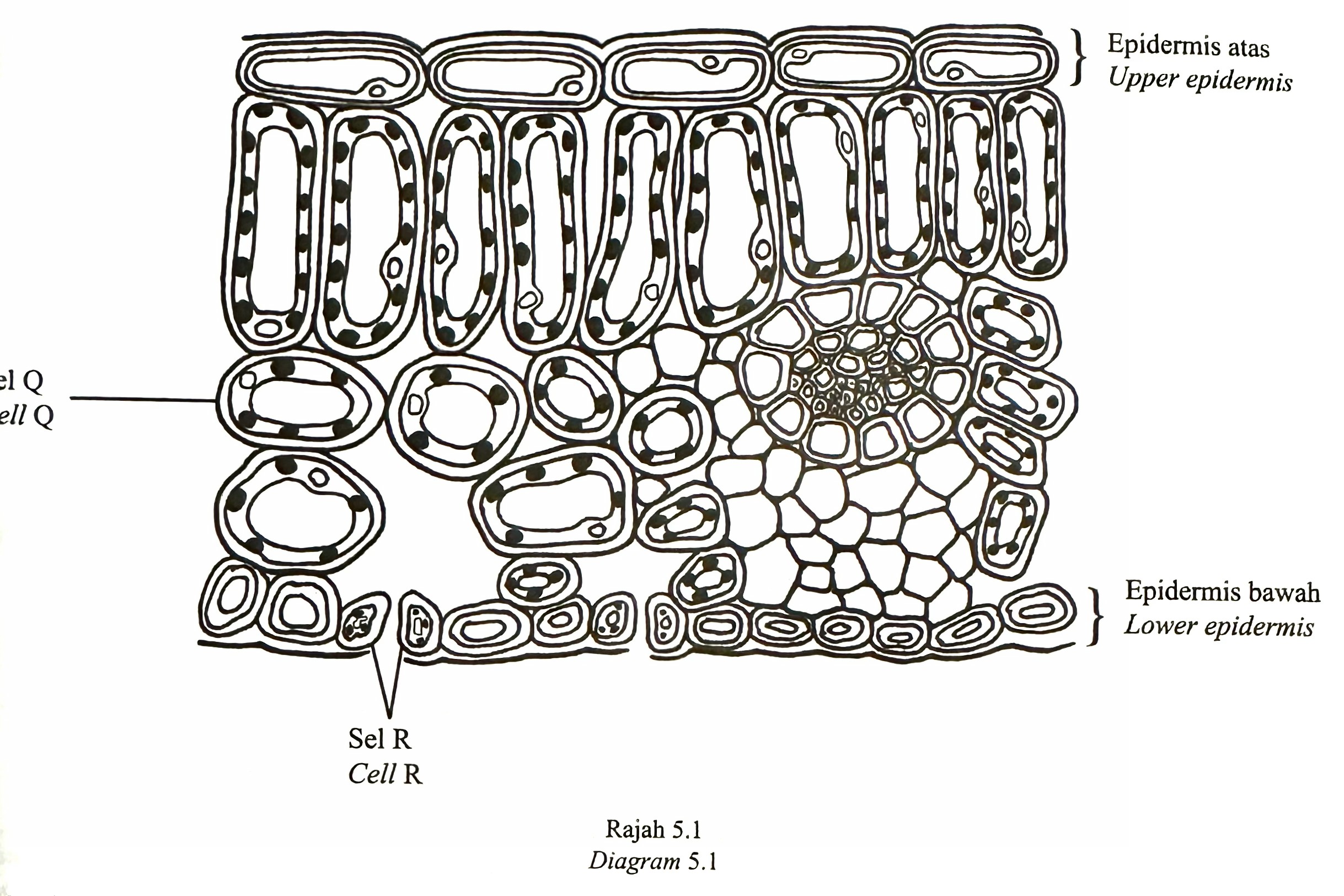
(a)(i) State the name of cell Q. [1 mark]
(ii) Give one adaptation of cell Q to carry out its function. [1 mark]
(b)(i) State the name of cell R. [1 mark]
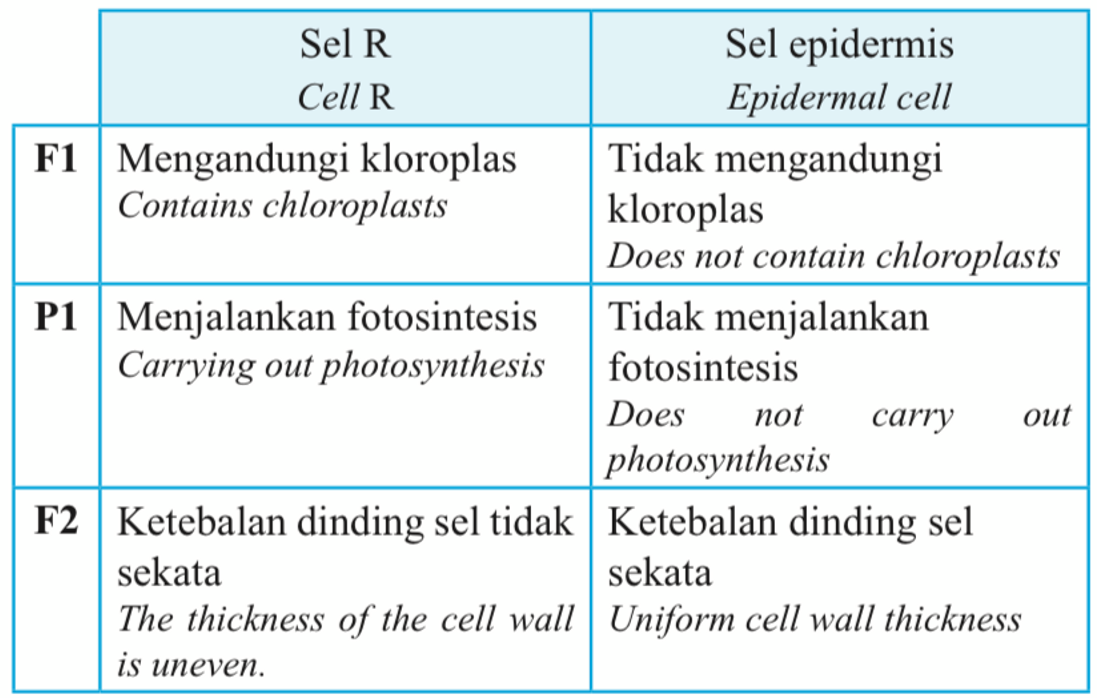
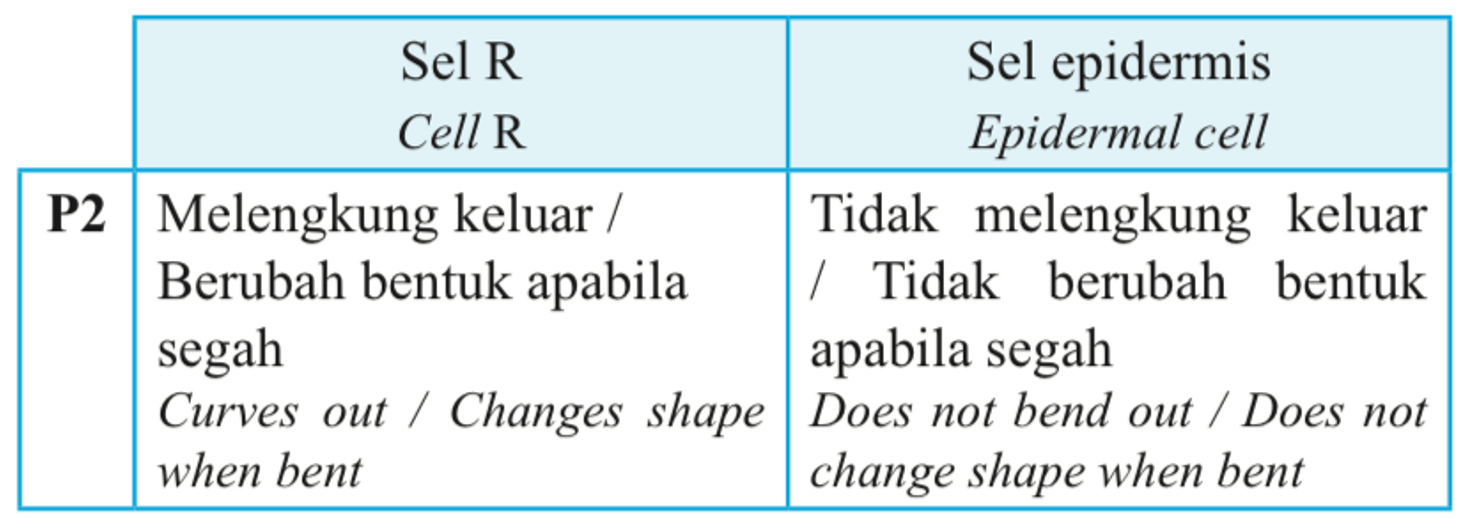
(ii) Explain one difference in characteristic between cell R and epidermal cell. [2 marks]
(c) Diagram 5.2 shows a plant that is planted in a living room.
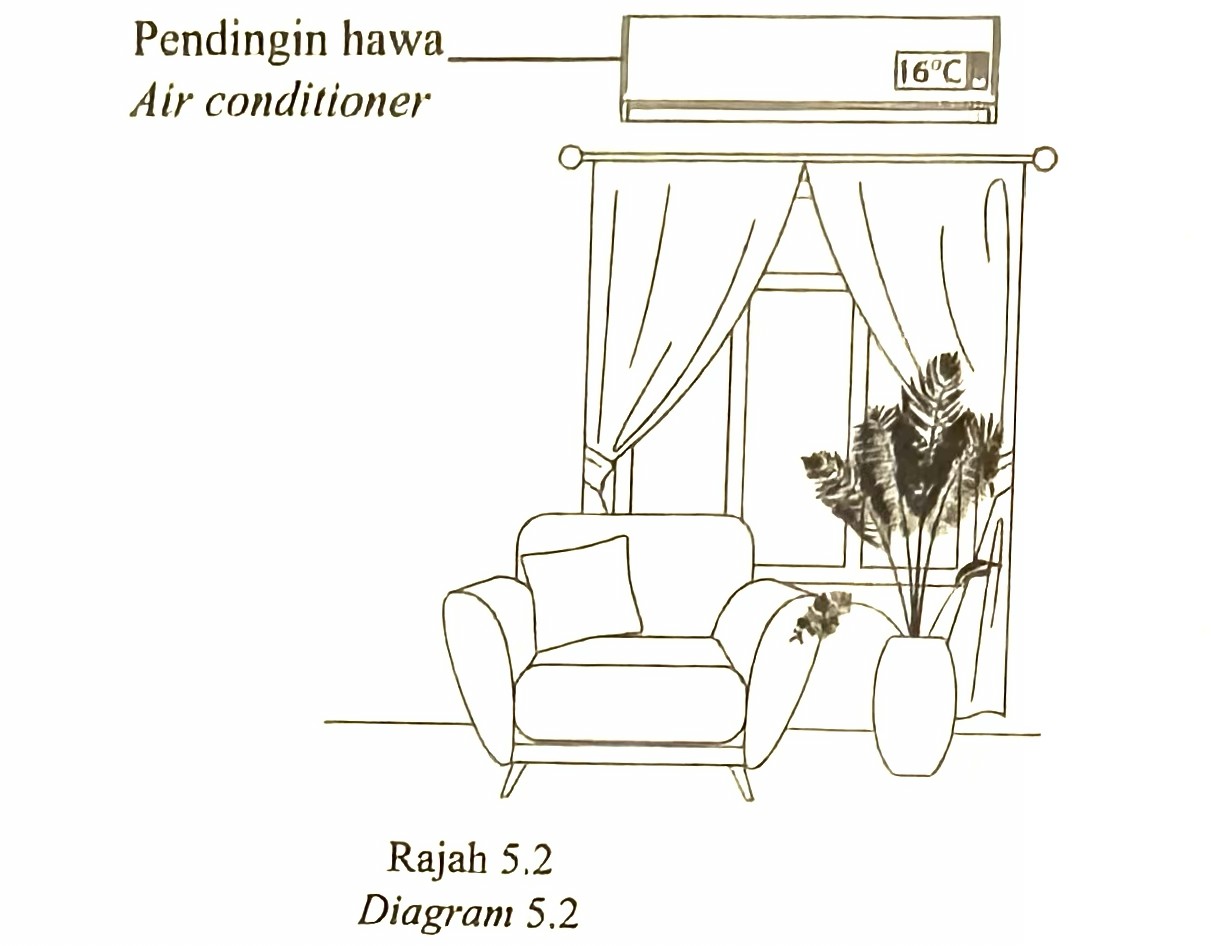
Explain the effect on the photosynthesis rate of the plant if air conditioner is used throughout the day.
[3 marks]
Answer:
(a)(i) Q: Spongy mesophyll
(a)(ii) Spongy mesophyll cells are irregularly shaped // These cells are loosely arranged // have many air spaces between the cells. // Have chloroplasts
Any one answers
(b)(i) R: Guard cell
(b)(ii)
(c)
P1: The rate of photosynthesis becomes low
P2: Because the ambient temperature is low
P3: Enzymes become inactive // The rate of enzyme reactions decreases
P4: Because photosynthesis is not catalyzed by enzymes
Any three answers
Diagram 5.1 shows a cross-section of a leaf lamina.
(a)(i) State the name of cell Q. [1 mark]
(ii) Give one adaptation of cell Q to carry out its function. [1 mark]
(b)(i) State the name of cell R. [1 mark]
(ii) Explain one difference in characteristic between cell R and epidermal cell. [2 marks]
(c) Diagram 5.2 shows a plant that is planted in a living room.
Explain the effect on the photosynthesis rate of the plant if air conditioner is used throughout the day.
[3 marks]
Answer:
(a)(i) Q: Spongy mesophyll
(a)(ii) Spongy mesophyll cells are irregularly shaped // These cells are loosely arranged // have many air spaces between the cells. // Have chloroplasts
Any one answers
(b)(i) R: Guard cell
(b)(ii)
(c)
P1: The rate of photosynthesis becomes low
P2: Because the ambient temperature is low
P3: Enzymes become inactive // The rate of enzyme reactions decreases
P4: Because photosynthesis is not catalyzed by enzymes
Any three answers