Question 1:
(a)(i) Diagram below shows an electron micrograph of cellular components of human blood.
(a)(i) Diagram below shows an electron micrograph of cellular components of human blood.
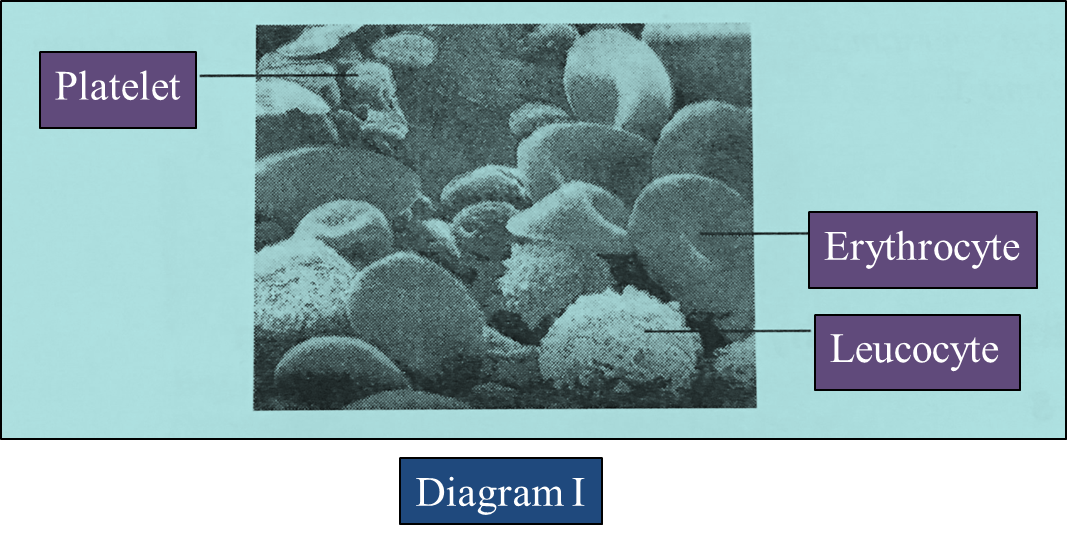
Based on Diagram I, explain how platelets help to stop bleeding when a wound occurs. [4 marks]
(ii) A blood test shows that a man’s erythrocytes count is below normal.
Explain the possible consequences of this condition on his health.
What type of food should be included in his diet to improve this condition? [8 marks]
(b) Diagram II shows the blood circulatory system in organism P and organism Q.
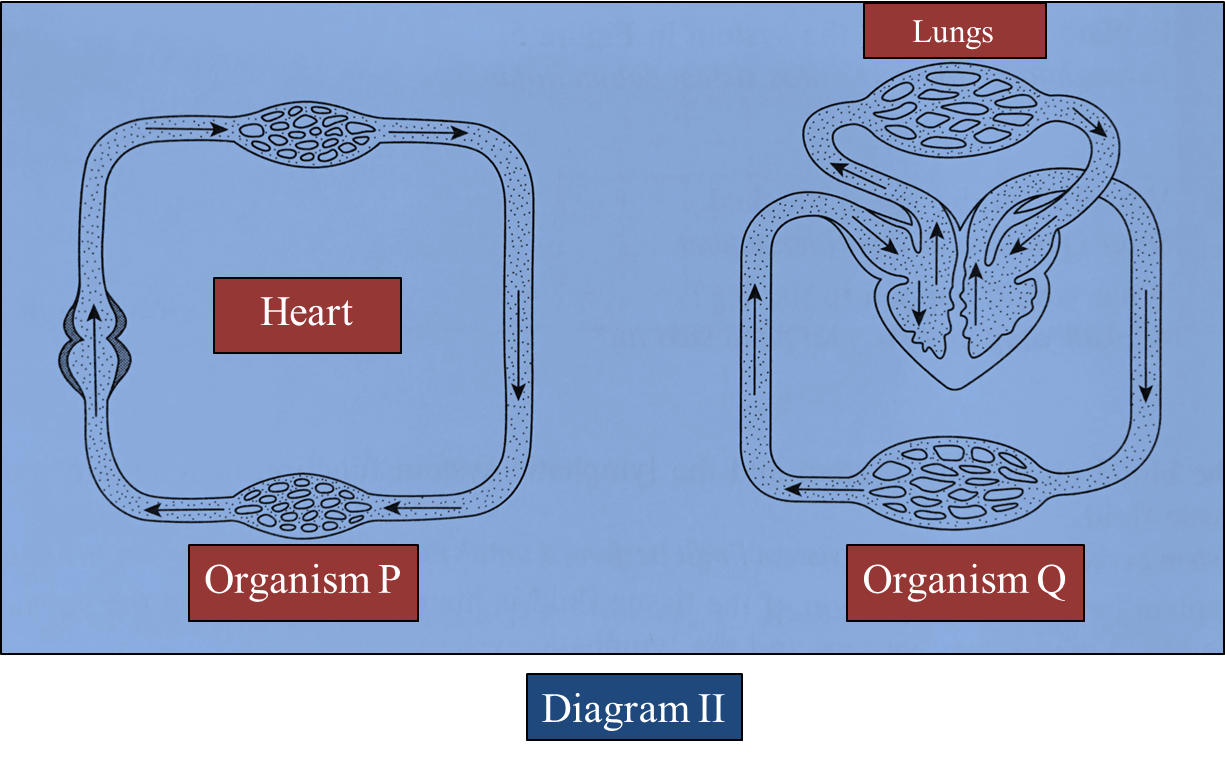
Based on Diagram II:
(i) Give one example of organism P and organism Q. [2 marks]
(ii) Describe the similarities and differences between the blood circulatory system in organism P and organism Q. [6 marks]
Answer:
(a)(i)
- Platelets clump together and produce thrombokinase.
- Thrombokinase converts prothrombin to thrombin.
- Thrombin converts fibrinogen (a type of soluble protein plasma) to fibrin (vitamin K is needed in the formation of prothrombin).
- Fibrin forms a network to trap the erythrocytes
- To form a clot
(a)(ii)
- Less red blood cells to combine with oxygen
- Less oxygen is transported to the body cells.
- Less energy is produced
- Resulting in tiredness/ pale looking appearance/ anaemia
- Need food which is rich in iron
- Examples: Cockles, liver, spinach
(b)(i)
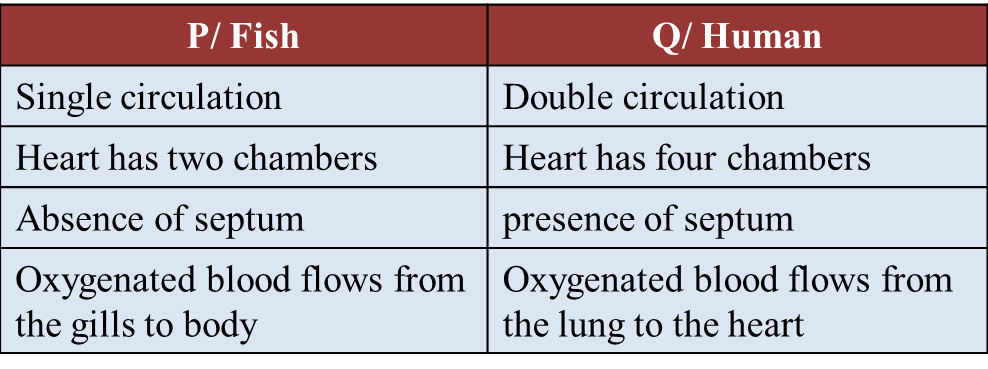
P: Fish
Q: Human being
(b)(ii)
Similarities:
- Both have a closed circulation
- Blood flows in blood vessels